

Nuisance Bee Complaints
The primary mission of the Feral Bee Abatement Program is to resolve complaints about bee-related health and safety issues throughout Los Angeles County.
Bees may be found anywhere in our environment. Feral (wild) bee colonies tend to be more protective of their hives compared to the more docile domesticated European bees used by commercial beekeepers.
Nuisance Bees
Bee related issues develop in urban communities when bees come into close proximity to humans. Nuisance bees occur most commonly in four ways:
1) Swarms
During the months of April, May, and June, many honeybee colonies swarm. A colony will divide and about 1/3 of the workers will leave with a queen to find a new location. The individual bees stay close to the queen and together can form a mass reaching one to two feet in diameter. When the bees land to rest, these masses are often seen on structures, shrubs, or the ground. If the swarms are left alone, they will usually leave in two to three days or sometimes even within a few hours. If you should find a swarm in a location that can’t be tolerated due to safety issues, contact a beekeeper or a pest control company. Some beekeepers will take these bees and add them to their own existing colonies. If the bees are not easily accessible, a pest control company may be needed to remove the bees with a pesticide.
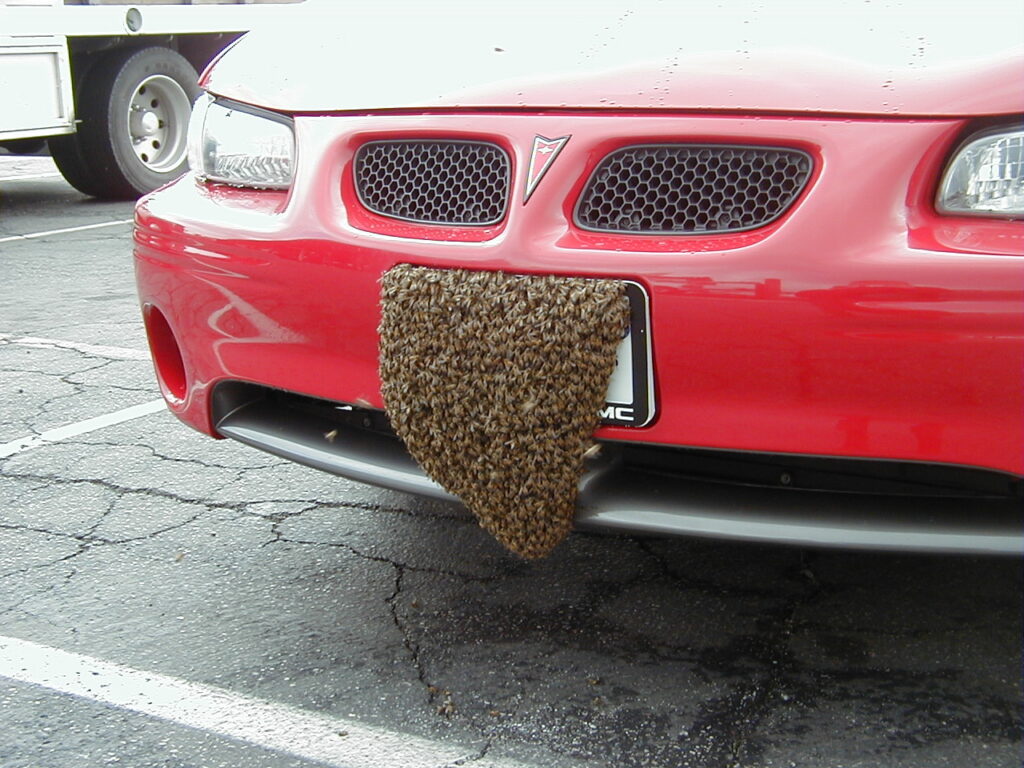
Swarm of bees on a car
2) Feral Bee Colony
Bee swarms will eventually find a suitable location to build another hive. Wild bees may find an opening in trees, quiet locations under rocky overhangs, or large tree limbs. In the urban landscape, structures are often perfect for bee colonies. Bees are drawn to quiet, unmaintained structures where openings in the structures provide protection and space for a colony to grow. If feral bees establish a colony on a property or in a structure and has been determined to be a public nuisance, County Public Health Ordinance 11.02.190 requires the person having control of the property to abate or remove such a condition or nuisance within a reasonable time.
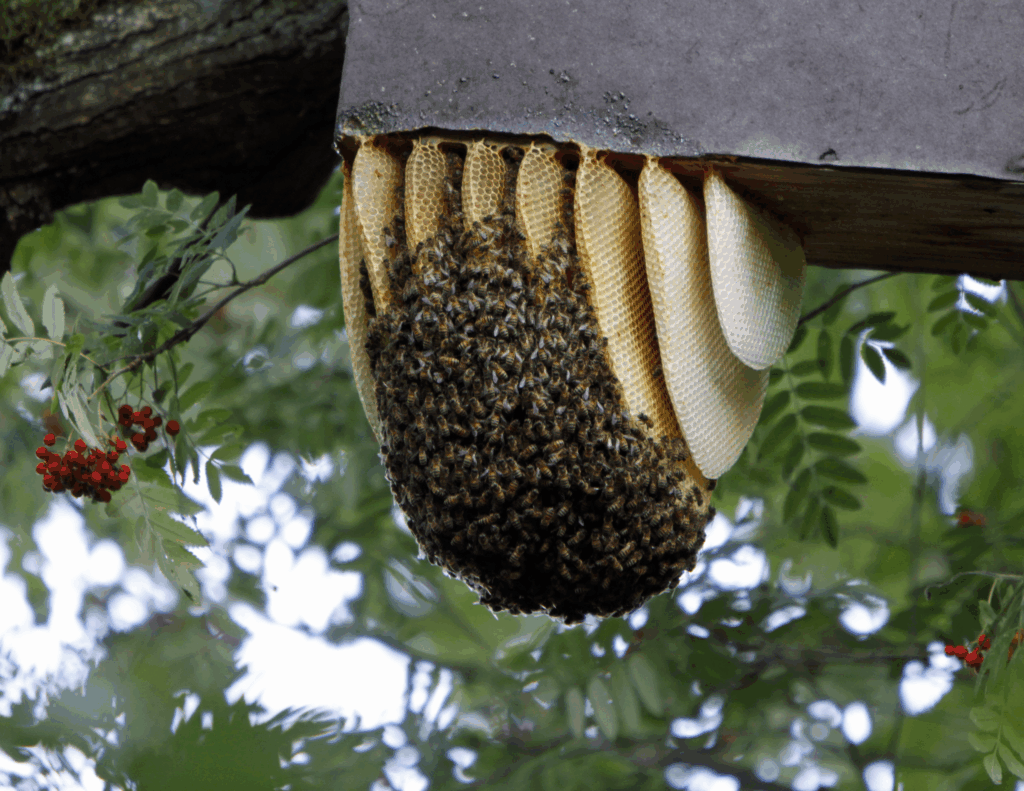
Feral bee colony
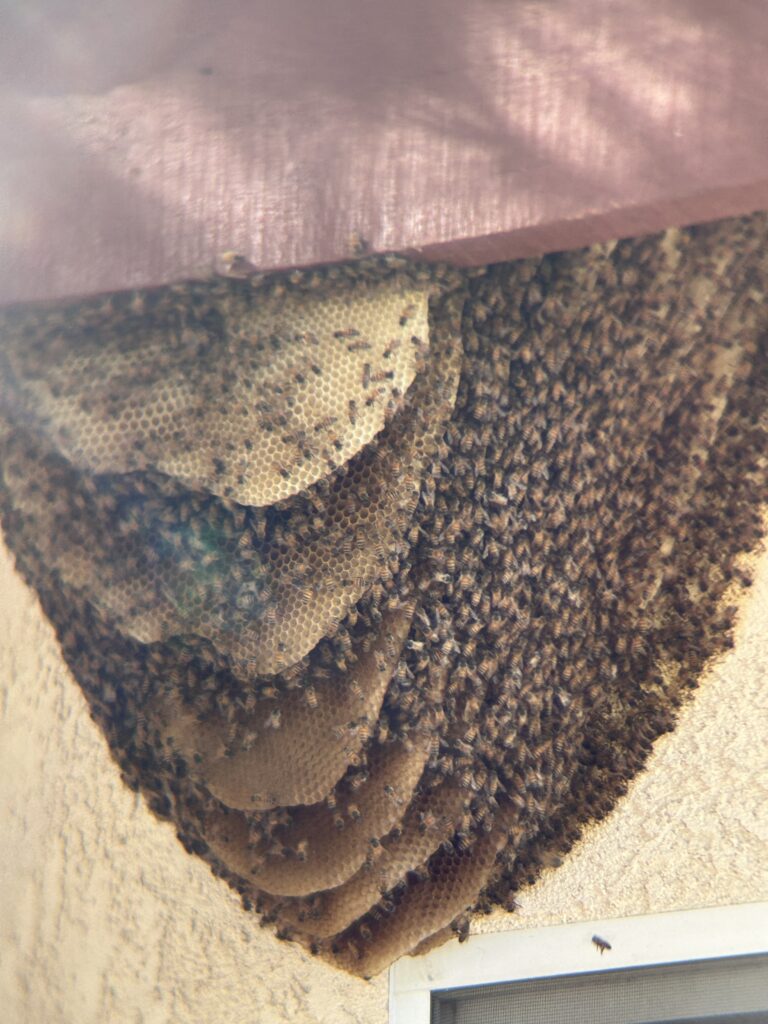
Feral bees on house
3) Foraging Bees
Bees are a very important part of our environment. They pollinate flowers and are the primary means in which many fruits, vegetables, and seeds are produced. Bees also forage for food (pollen and nectar) and water to cool their hive. These foraging bees often come in contact with people and pets near flowering plants, pet water bowls, and swimming pools. These bees are typically not aggressive, however, if threatened they will naturally defend themselves. We learn a quick and painful lesson when this occurs.
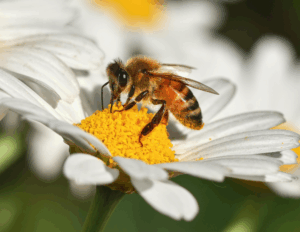
Foraging bee
4) Beekeepers
There are 88 cities in Los Angeles County; each city may have its own beekeeping restrictions. Beekeepers must properly maintain their hives so that they don’t become a public nuisance. Bees need water to cool their hives and by providing a good source of water for the bees, it will help to keep bees out of neighboring swimming pools, spas, bird baths, and even a pet’s water bowl. To prevent cross breeding with feral bees with unknown genetics, beekeepers should re-queen their hives with docile European Queen Bees with known genetics.
- Bee colonies with Africanized honeybee genes are difficult to manage because they are so protective of their hives. Their aggressive behavior increases the likelihood of bee attacks.
- All beekeepers are required to register their bee colonies annually on BeeWhere and by completing an Annual Apiary Registration Form with the Los Angeles County Agricultural Commissioner/Weights and Measures Department, per Division 13 of the California Food and Agriculture Code. Nuisance bee incidents which affect the health and safety of the public will be investigated after a nuisance bee complaint is submitted to our office.
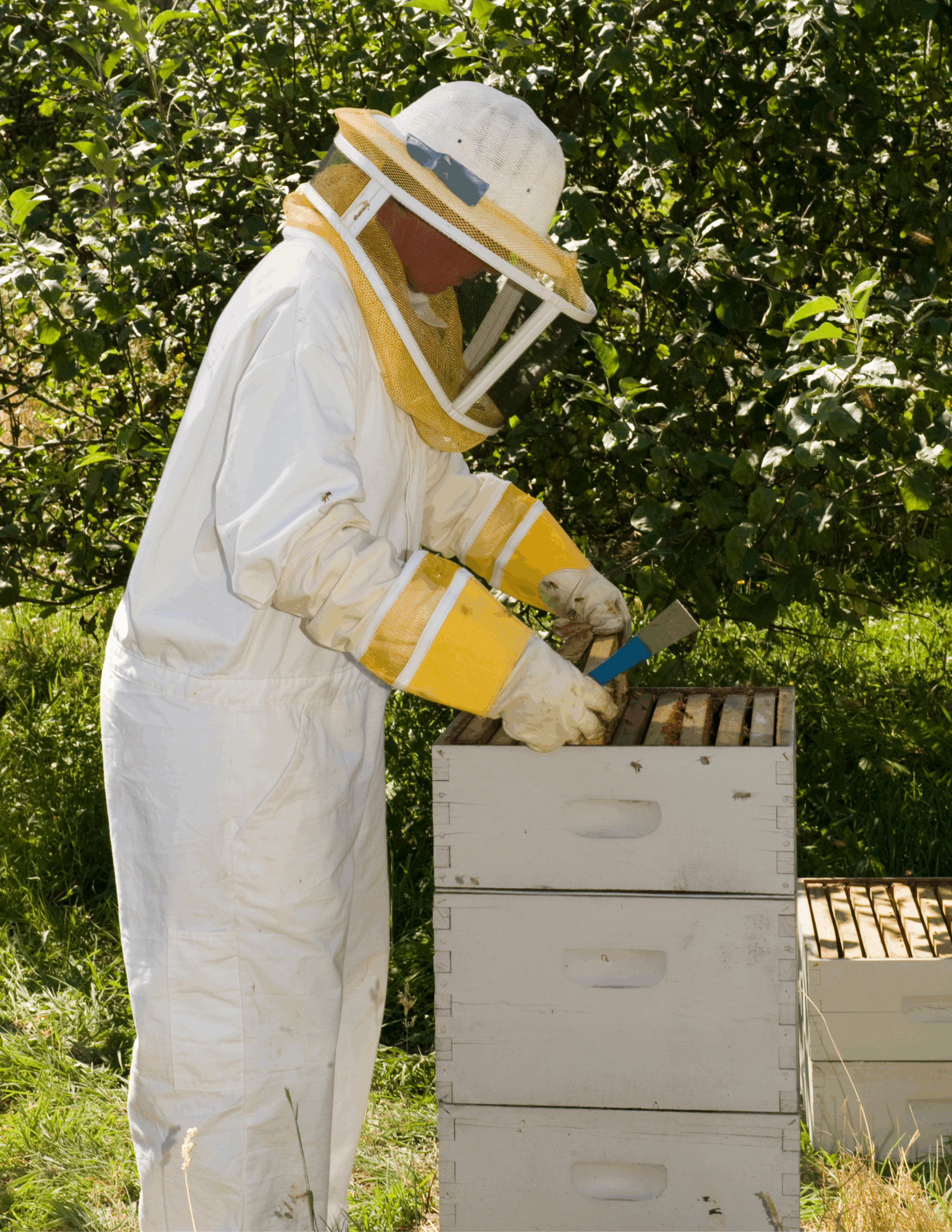
Beekeeper removing a hive frame

Commercial apiary
Wasps vs. Bees
Our department does not respond to wasp complaints.
If you are dealing with nuisance wasps, please contact a licensed pest control company. While similar in appearance at first glance, bees and wasps have distinct differences in their morphology, ecological role, and behavior.
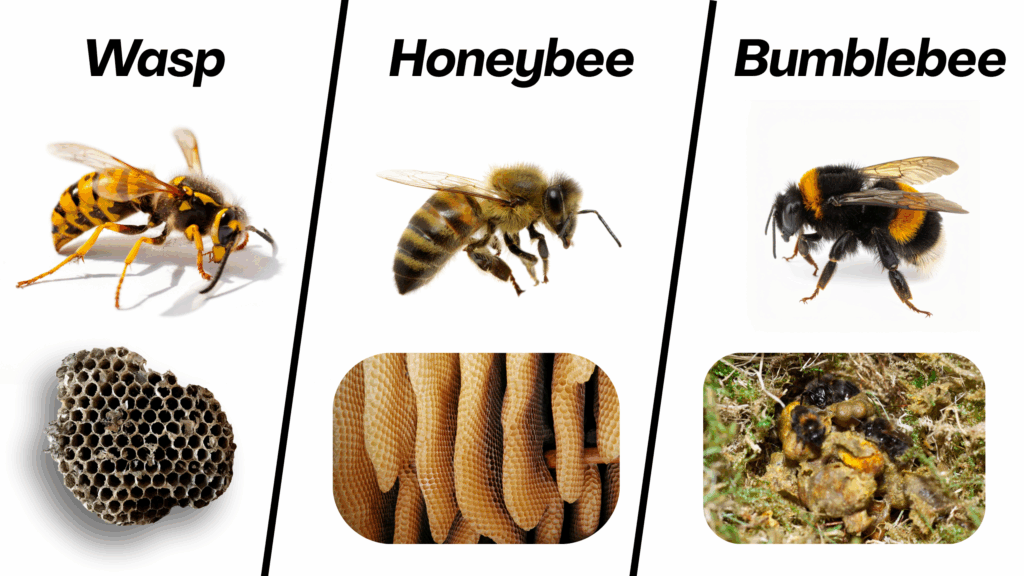
Wasps differ from bees by their slender, smooth bodies with narrow waists, and less hair; whereas, bees have thick, rounded bodies covered in hair. Wasps typically have bright yellow and black markings, and bees are generally brown or golden in color.
In addition to the wasp and honeybee is the bumblebee. Bumblebees are usually very docile compared to feral honeybees or wasps and should be left undisturbed. Some bumblebee species are even listed under the Federal Endangered Species Act and are protected. Bumblebees have small nests, usually close to the ground or even underground. Bumblebee colonies die in late fall, leaving only the queen, which hibernates during the winter and starts a new colony in the spring.
See below for the difference between wasps, honeybees, and bumblebees.
Nuisance Bee Complaint
Bee removal services are not provided by this Department.
Public Property - If the nuisance bees are on public property, please contact your city for assistance. If the bees are in a utility box, please contact the utility company.
Private Property - If the bee issue is on your private property, it is your responsibility to abate the nuisance.
Click Here to view a List of beekeepers who perform live bee removals.
Click Here to view a List of licensed pest control companies that specialize in bee removals.
Neighboring Property - If a bee infestation is on a neighboring private property and has become a nuisance, contact our Bee Info Line at (800) 233-9279 to report a complaint, or you can submit an online compliant form.
When you call, please be prepared to provide your first name, last name, contact information, and the address with a description of where the bees are located.
Click Here to be directed to our Nuisance Bee Complaint online form.